“plant area” search results (9000)

Requirements of Coffee on Ecological Environment Environmental requirements for planting Coffee trees
Small seed coffee is native to the lower part of the Ethiopian rainforest in northern Africa. The temperature is relatively low, with an average annual temperature of 20 degrees. The origin of medium-grain coffee is near the equator. Therefore, small seed coffee has stronger cold tolerance and wider adaptability than medium grain coffee. Medium-grain coffee requires a slightly higher temperature. First, the requirement for temperature should be based on the natural conditions of Yunnan, and the suitable planting area of coffee should be selected.
2015-02-25 Coffee ecological environment requirements planting environment
Environmental requirements for growing Coffee in Coffee Farm in India
Coffee planting conditions and distribution 1. What is coffee? Coffee (Coffee) is derived from the Latin word Coffea (biological word name) and belongs to a member of the Rubiaceae family. These plants are all woody plants, most of which are distributed in the tropics, with more than 500 classifications and about 6000 varieties. Most of the Coffea plants are tropical 5-6 meters high.
2016-06-15 India coffee manor planting environment requirements conditions distribution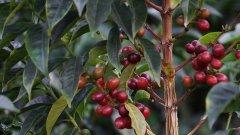
Kaddura and Kaduai Coffee beans in Tarazu production area of Saint Roman washing Plant, Costa Rica
The harvesting method and refining method are adopted. Generally speaking, it is better to adopt manual harvesting method and water washing refining method. A variety of fine coffee. It is better to use Arabica inherent variety Tibica or bourbon variety. Is the altitude, topography, climate, soil and refinement of the cultivated land or farm clear? Generally speaking, the coffee with high altitude is of higher quality, and the fertile volcanic soil is the best soil.
2016-06-30 Costa Rica Roman washing processing Plant Tara production area Dula Kadu Coffee
El Salvador Coffee producing area Sonsonate Province IzaIco area Santa Ana Volcano area
[organic planting]: the civil war in the 1980s made many coffee farmers in war zones unwilling to spend agricultural fertilizer on coffee plantations, resulting in the fact of "organic planting". After the war, coffee plantations with organic cultivation were set up with the assistance of the government, and many of them obtained the Eco-ok certification of the Rainforest Alliance (Rain forest-Alliance). There is currently 2000 hectares of coffee.
2016-06-24 El Salvador coffee producing area Sonsonate IzaIco region
Developing Coffee planting Industry in Pu'er Tea Township
The "Pu'er Tea Township" has made great efforts to develop the coffee planting industry in recent years. In 2010, the coffee planting area of the city reached 230000 mu, accounting for 52.8% and 50.5% of the province and the country, respectively, making it the coffee producing area with the widest planting area and the highest output in China.
2014-07-09 Pu'er Tea Township Coffee planting Industry Coffee Manor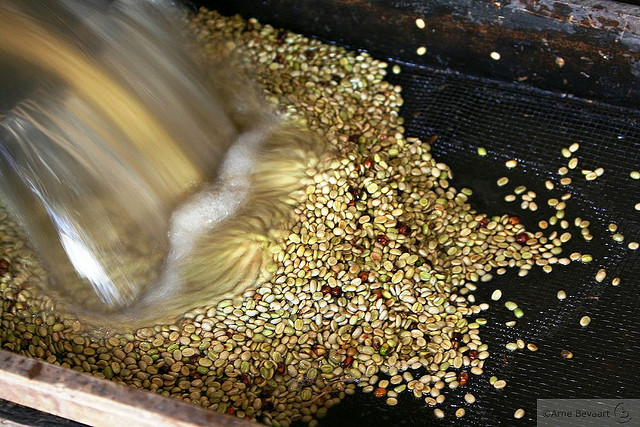
How to choose coffee bean AA grade vine from Jiatugi treatment plant in Nyeri producing area of Kenya
Kenya, located in East Africa, is one of the major coffee producing countries. More than 6 million people in the country are engaged in the coffee industry, mostly in the form of a combination of small farmers and cooperatives. Coffee trees in Kenya are mostly planted at 1400 m-2000 m above sea level, and the growing areas include Ruiri, Thika, Kirinyaga and Mt. Kenya West, Nyeri, Kiambu and Muranga. With Mt.Kenya and Ab
2016-03-29 How to choose coffee beans Kenya Nyeri producing area home Tuji Gat
Coffee bean Katim CIFC7963
Characteristic small seed coffee, belongs to the Katim high generation variety, the plant is medium dwarf, the growth vigor is vigorous, the secondary character is stable, the crown top bud tender leaf is emerald green, the whole plant leaf color is dark green, the plant shape is columnar, the Internode is short, the branch is many, the growth is exuberant, the adaptability is wide, the drought resistance is strong, has the certain cold resistance ability, under the medium management level, the average dry bean yield is more than 200 kg. Seeds per kilogram
2014-09-05 Coffee beans Katim.
Where can I buy coffee beans online? Where can I buy coffee beans? Saint Roman, the Tarazu producing area of Costa Rica
1. When buying beans online, you should pay attention to the production date, shelf life, packaging and sealing, the roasting degree of coffee beans, the types of coffee beans, and your utensils to determine what kind of beans you want. If you use blue mountain beans to make ESP, it is indeed a maverick way, but it is also too unprofessional and expensive, and the taste is not very good. The production date must be at least
2016-04-23 Online how can I buy coffee beans where to go buy good Costa Rica Tara production area
Introduction to the planting methods of the Coffee growing area in El Salvador
A brief History of Coffee production in 1742, coffee was introduced to El Salvador from the Caribbean (1740). In the mid-19th century, El Salvador's original export pillar Indigo (one of the dyes) received a gradual decline in the development of synthetic dyes in Europe, and coffee gradually became the main export product under the guidance of the government. In 1856, the first 693 bags of coffee beans were shipped to Europe. all long
2016-07-11 Salva many Coffee planting area way introduction Anna Volcano region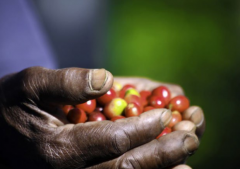
Country of production: Zimbabwe planting area: Chipingai Dandoni Farm
Commercial coffee cultivation in Zimbabwe began in the 1960s. The coffee produced here, like many East African coffee, has a good balance, complex variability, as well as good bean shape and processing technology. Zimbabwe AA-Dandoni Village producing country: Zimbabwe Grade: AA planting area: Qipinggai Factory label: Dandoni Farm treatment method: wet processing outside
2016-06-07 Producing country Zimbabwe planting region Qiping Dandoni Farm Tianjin
High-quality coffee Nicaraguan coffee planting environment flavor production area introduction to Tianyi Manor
Nicaragua has a unique ecological environment for growing coffee, which is covered with fertile volcanic soil and shaded planting mode, which makes the coffee fruit grow slowly and indirectly absorb the moisture brought by the thick fog, which establishes the good growth essence of coffee. The manor uses hand-picked fully ripe coffee beans, washed and processed, with rich mellow, multi-layered taste and clean aroma.
2016-07-12 High quality Coffee Nicaragua planting Environment Flavor producing area introduction Day
Yunnan small-grain Coffee Huaguoshan Coffee Flavor description treatment characteristics of varieties in producing areas
Pu'er, Xishuangbanna, Wenshan, Baoshan, Dehong, Lincang and other places in the south and west of Yunnan are all the distribution areas of small-grain coffee in Yunnan. As of January 1, 2012, according to the comprehensive survey of Yunnan Province, the planting area of coffee in Yunnan has exceeded 800000 mu, and the output of coffee beans in this period is expected to exceed 55000 tons. For the future, the blueprints of local governments in Yunnan have also been drawn up:
2016-10-13 Yunnan small grains Coffee Huaguoshan Flavor description treatment characteristics varieties producing areas
Sidamo boutique coffee cooked beans Ethiopia G2 manor bean washing treatment fruity flavor
There are many water treatment plants on the main roads of coffee producing areas, especially in Jima area, and a large number of treatment plants are not fully utilized because of the fierce competition, so the person in charge of the treatment plant pays higher prices to farmers, but worries about whether they can make a profit. Nowadays, a kilogram of raw beans is usually sold for about 2 Birr (Ethiopian units).
2016-07-07 Dharma boutique coffee cooked beans Ethiopia grade manor washing treatment
Introduction of the latest information of coffee in Yunnan
Yunnan small-grain coffee, Rubiaceae, coffee genus, the planting area is mainly distributed in Lincang, Baoshan, Simao, Xishuangbanna, Dehong and other states. [1] small grains of coffee are native to Ethiopia or Arabian Peninsula. It is cultivated in Fujian, Guangdong, Hainan, Guangxi, Sichuan, Guizhou and Yunnan. The western and southern parts of Yunnan Province are located between latitude 15 and Tropic of Cancer, and most areas are at an altitude of 1000.
2015-12-05 Yunnan Coffee latest Information introduction Origin small grains Grass Family
General knowledge of Coffee planting Environmental requirements for the cultivation of small Coffee in Yunnan
Small seed coffee is native to the lower part of the Ethiopian rainforest in northern Africa. The temperature is relatively low, with an average annual temperature of 20 degrees. The origin of medium-grain coffee is near the equator. Therefore, small seed coffee has stronger cold tolerance and wider adaptability than medium grain coffee. Medium-grain coffee requires a slightly higher temperature. First, the requirement for temperature should be based on the natural conditions of Yunnan, and the suitable planting area of coffee should be selected.
2015-02-16 Coffee planting common sense Yunnan small grains environment requirements
Yunnan Coffee beans Coffee areas grown in China
The western and southern parts of Yunnan Coffee Province are located between 15 N and the Tropic of Cancer, most of which are 1000-2000 meters above sea level. The topography is mainly mountainous and sloping, with large ups and downs, fertile soil, sufficient sunshine, rich rainfall and large temperature difference between day and night. These unique natural conditions form the particularity of Yunnan small grain coffee taste, which is strong but not bitter, fragrant but not strong, slightly fruity.
2016-05-18 Yunnan coffee beans China planting coffee regions west
Introduction to the characteristics of Yunnan Tieka Coffee Flavor Flavor Manor
Tibika and Bobang coffee are the main cultivated varieties in Baoshan since the Yunnan Academy of Agricultural Sciences in 1951, and they are only planted in low-altitude areas below 1000 meters above sea level. They have won the gold medal internationally. The world's coffee (tooth sales plus) Blue Mountain Coffee is developed because of its low output (about 900 tons per year) and because its planting industry is supported by the Japanese.
2016-07-25 Yunnan pickup coffee flavor manor producing area characteristics introduction taste
Coffee planting manors in coffee-producing areas in Indonesia Kahayang Gan Manor
The main coffee producing area Java, the oldest producing area, continues its reputation from the glorious era of Indonesian coffee in the 18th century. When it comes to Java coffee, it is still reminiscent of quality and delicacy. At that time, the most famous blend was Java coffee with Yemeni mocha. In addition, Java also has a very famous old coffee Aged coffee, or monsoon coffee Monsooned c
2016-07-11 Coffee planting way Indonesia producing area Manor introduction Kaha Yanggan
Introduction to the growing environment of Yunnan coffee and the proportion of seed brewing methods
Yunnan small grain coffee introduces Yunnan boutique coffee beans. China's coffee cultivation is concentrated in Yunnan and Hainan provinces. Yunnan has a large output, with an annual output of about 26000 tons in recent years, accounting for 90 per cent of the national output. It is said that Yunnan coffee came from the French 70 or 80 years ago. The main variety is Arabica Arabica, that is, the so-called small seed coffee, commonly known as Yunnan small grain coffee. Yunnan high-quality
2016-09-08 Yunnan coffee growth regional environment seeds methods brewing mode proportion medium
Requirements of Ecological Environment for planting Coffee trees
Small seed coffee is native to the lower part of the Ethiopian rainforest in northern Africa. The temperature is relatively low, with an average annual temperature of 20 degrees. The origin of medium-grain coffee is near the equator. Therefore, small seed coffee has stronger cold tolerance and wider adaptability than medium grain coffee. Medium-grain coffee requires a slightly higher temperature.
2014-09-02 Coffee knowledge coffee tree planting environmental requirements coffee beans